Hey there, fellow athlete. Picture this: It’s the final stretch of a grueling soccer match, and you’re weaving through defenders like it’s no big deal. That explosive turn? All thanks to a rock-solid core you didn’t even think about. I remember my early days training as a college track runner—ignoring core work left me sidelined with a nagging back tweak. Once I dialed in advanced routines, though, my performance skyrocketed. If you’re pushing your limits in any sport, this guide is your roadmap to a bulletproof midsection. We’ll dive deep into why it matters, killer exercises, and a full workout plan that feels more like a game-changer than a grind.
Why Core Strength Matters for Athletes
Your core isn’t just about aesthetics—it’s the powerhouse linking your upper and lower body, transferring force like a well-oiled machine. For athletes, weak core stability means sloppy movements, higher injury risk, and stalled progress. Think of it as the foundation of every sprint, swing, or lift.
I’ve seen teammates crumble under pressure because their core couldn’t handle the chaos of competition. Building advanced strength here boosts power output, balance, and endurance, turning good athletes into elite ones. Plus, it keeps you in the game longer, dodging those frustrating tweaks.
Understanding Your Core Muscles
The core goes way beyond the six-pack abs you see in magazines—it’s a complex system including the transverse abdominis, obliques, rectus abdominis, erector spinae, and even parts of your glutes and hips. These muscles work together for stability, rotation, and anti-movement patterns that mimic real sports demands.
In my coaching experience, athletes often overlook the deep stabilizers, focusing only on surface crunches. But targeting the full ensemble creates that “linked” feel, where every move flows seamlessly. It’s like upgrading from a rickety bridge to a steel beam.
Building a Foundation Before Going Advanced
Jumping straight into advanced core workouts without basics is like running a marathon without warm-ups—you’ll pay for it later. Start with isometric holds like planks to master bracing and neutral spine, ensuring your form is dialed in.
I once pushed a newbie athlete too fast, and he ended up with a pulled oblique. Lesson learned: Progress gradually, maybe 4-6 weeks on fundamentals, to build the motor control that advanced moves demand. This sets you up for success without the setbacks.
Key Foundational Exercises
- Plank variations: Hold for 20-30 seconds, focusing on even breathing.
- Bird dogs: Alternate arm and leg extensions to engage stabilizers.
- Dead bugs: Slow lowers to teach anti-extension control.
These build the base, making advanced stuff feel natural rather than punishing.
Top Advanced Core Exercises for Athletes
Once you’re solid on basics, level up to exercises that challenge stability, rotation, and power in multiple planes. These aren’t your gym-bro crunches; they’re functional moves that translate directly to the field or court. I’ll break down my favorites, drawn from years of trial and error in training sessions.
High Plank with Arm and Leg Raise
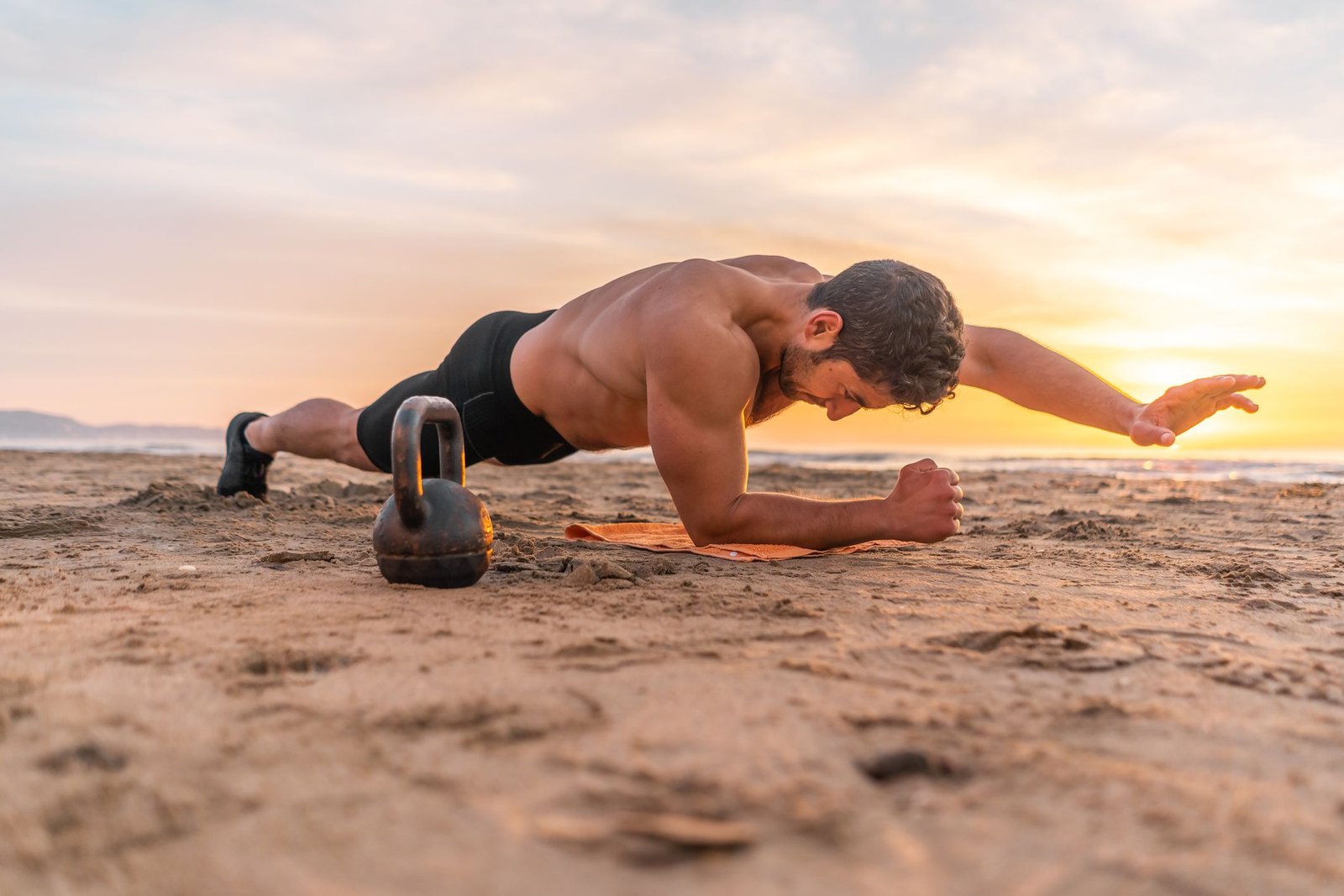
This beast fires up your entire core while testing shoulder stability—perfect for throwers or grapplers. Start in a high plank, then lift one arm and the opposite leg, holding parallel to the floor for 3-5 seconds before switching.
Athletes love it because it mimics the instability of contact sports, forcing your deep core to kick in. I use it post-sprints to reinforce that “locked-in” posture, and clients report fewer tweaks after a few weeks.
Dead Bug with Swiss Ball
Lie on your back, squeezing a stability ball between hands and knees, then extend opposite arm and leg slowly while keeping your low back glued down. Aim for 8-12 reps per side.
It’s a game-changer for anti-extension strength, crucial for runners or cyclists who fight forward collapse. One client, a marathoner, shaved minutes off his time after incorporating this—his form stayed tight mile after mile.
Pallof Press Variations
Attach a band to a rig at chest height, stand perpendicular, and press it straight out, resisting the pull for 10-15 seconds per side. Advance by adding a lunge or rotation.
Anti-rotation gold for sports like tennis or basketball, where twists are constant. I’ve joked with athletes that it’s like training to ignore a pesky opponent tugging at you—builds that unshakeable core resilience.
Ab Wheel Rollouts with Weight
Kneel with an ab wheel, roll out slowly until your body is extended, then pull back using your core. Add a plate on your back for extra challenge, 6-10 reps.
This hammers anti-flexion, essential for lifters and combat athletes. Back in my powerlifting days, it saved my back during heavy deadlifts—pure force transfer without the collapse.
Stir the Pot
On a stability ball in plank position, circle your elbows slowly, keeping hips level—start small, build to full rotations, 5-8 per direction.
It’s deceptively tough, enhancing endurance for sustained efforts like swimming or wrestling. A swimmer I trained called it his “secret weapon” for smoother strokes and less fatigue.
Hanging Leg Raises with Twist
Hang from a bar, raise straight legs to 90 degrees, then twist side to side—10 reps total.
Targets obliques and hip flexors for rotational power in sports like golf or martial arts. I remember twisting too fast once and feeling the burn—humorously, it was a wake-up call to control the descent.
Landmine Rotations
Load one end of a bar in a landmine attachment, rotate it side to side from a standing or kneeling position, 8-12 reps per side.
Great for explosive twists, mimicking swings or throws. Elite coaches swear by it for its adjustable resistance—I’ve seen boxers add serious punch after weeks of this.
Sample Advanced Core Workout Routine
Ready to put it all together? This routine hits all planes—do it 2-3 times a week after your main session, with at least a day off in between. Warm up with 5 minutes of light cardio and basic planks. Each circuit takes about 20-30 minutes, scalable for your sport.
| Exercise | Sets x Reps/Time | Rest | Notes |
|---|---|---|---|
| Pallof Press | 3 x 20-30 sec/side | 45 sec | Focus on slow press out |
| Dead Bug with Ball | 3 x 10/side | 30 sec | Keep low back flat |
| Ab Wheel Rollouts | 3 x 8-10 | 60 sec | Add weight if easy |
| Stir the Pot | 3 x 6/direction | 45 sec | Build circle size gradually |
| Hanging Leg Raises | 3 x 8-12 | 60 sec | Control the lower |
| Landmine Rotations | 3 x 10/side | 45 sec | Explosive but controlled |
Finish with a 1-minute hollow hold to tie it all in. Track progress by adding time or resistance every two weeks—your core will thank you.
Pros and Cons of Advanced Core Training
Diving into advanced core work can supercharge your athleticism, but it’s not without hurdles. Let’s weigh it out honestly, based on what I’ve seen in the trenches.
Pros
- Enhanced power transfer: Better force from legs to arms, boosting jumps and throws.
- Injury prevention: Stronger stabilizers mean fewer back or hip issues—I’ve coached athletes through seasons unscathed.
- Sport-specific gains: Tailored moves improve performance in your niche, like better rotation for pitchers.
- Mental toughness: Pushing through the burn builds grit, that “I got this” mindset.
Cons
- Risk of overdoing it: Form slips can lead to strains; always prioritize technique.
- Time investment: Adding 20-30 minutes per session might feel like a drag initially.
- Equipment needs: Bands, balls, or landmines aren’t always gym staples—home setups work, though.
- Plateau potential: Without progression, gains stall; mix it up to keep challenging.
Overall, the pros outweigh the cons if you’re consistent and smart about it.
Comparing Beginner vs. Advanced Core Workouts
Wondering how to bridge the gap? Beginners focus on isolation and endurance, while advanced amps up instability and integration. Here’s a side-by-side to clarify—use this to assess where you stand.
| Aspect | Beginner | Advanced |
|---|---|---|
| Focus | Basic stability (e.g., standard planks) | Multi-plane dynamics (e.g., rotations with resistance) |
| Intensity | Bodyweight, 20-30 sec holds | Added load/unstability, 45+ sec with reps |
| Examples | Bird dog, basic dead bug | Pallof press, ab wheel with plate |
| Frequency | 3-4x/week, short sessions | 2-3x/week, integrated into sport training |
| Benefits | Builds foundation, reduces beginner injuries | Boosts power, sport transfer, elite performance |
Transition when you can hold a plank for 60 seconds without sagging— that’s your green light.
Common Mistakes to Avoid in Advanced Core Training
Even seasoned athletes trip up here. Rushing progression is huge—I’ve pulled my own oblique by ego-lifting too soon. Another: Neglecting breathing; brace on exhales to maximize engagement.
Don’t isolate crunches endlessly; balance with anti-movements for real-world strength. And skip the mirror-gazing—feel the burn in your deep core, not just the surface. Fix these, and you’ll progress faster.
Nutrition and Recovery for Optimal Core Strength
Fueling your core gains is as key as the workouts. Protein-rich meals post-session repair those micro-tears—think eggs, lean meats, or plant-based options like quinoa. Hydrate like your performance depends on it, because it does.
Recovery-wise, foam rolling and sleep are non-negotiable. I swear by 7-9 hours nightly; skimping led to my worst plateaus. For tools, grab a stability ball or resistance bands—affordable starters for home setups. Check out Garage Strength’s guide on recovery tools for more.
People Also Ask
Google’s “People Also Ask” for advanced core workouts often highlights practical curiosities. Here’s a roundup of real questions with straightforward answers, pulled from search trends.
What are the best advanced core exercises for athletes?
Top picks include Pallof presses for anti-rotation and hanging leg raises for hip flexor power. They target functional strength over aesthetics, ideal for sports demands.
How often should athletes do advanced core workouts?
Aim for 2-3 sessions weekly, integrated after main training. Overdoing it risks fatigue—listen to your body for recovery cues.
What equipment do I need for advanced core training?
Minimal: A stability ball, resistance bands, and pull-up bar suffice. For landmine work, a barbell setup shines—budget-friendly for most gyms.
Can advanced core exercises improve sports performance?
Absolutely; they enhance stability and power transfer, as seen in studies on athletes. Expect better explosiveness in 4-6 weeks.
What’s the difference between core strength and core stability?
Strength builds muscle power, while stability focuses on control against forces—both essential, but advanced routines blend them for athletic edge.
FAQ
Got lingering questions? These are common ones from athletes I’ve trained and online forums—let’s clear them up.
How long until I see results from advanced core workouts?
Most notice improved stability in 3-4 weeks with consistency, but full strength gains take 8-12 weeks. Track with plank times or sport metrics.
Are advanced core exercises safe for youth athletes?
Yes, if progressed properly—start lighter and supervise form. I coach teens with scaled versions, avoiding overload to prevent growth plate issues.
What’s the best way to progress in core training?
Add time, reps, or instability weekly. For example, evolve from bodyweight to weighted planks. Consult a trainer if you’re unsure.
Do I need a gym for these workouts?
Nope—many like dead bugs or bird dogs are bodyweight. For variety, TrainHeroic’s app offers home adaptations.
How does core training prevent injuries?
By reinforcing anti-movement patterns, it shields your spine during impacts. Runners I’ve worked with cut shin splints dramatically.
There you have it—a complete blueprint to elevate your core game. Stick with it, and you’ll feel that unbreakable edge in every athletic pursuit. What’s your go-to exercise? Drop a comment and let’s chat. For more on foundational moves, check our beginner core guide. Stay strong!